
A college dorm bed has to do more than give you a place to sleep. It is usually the biggest piece of furniture in the room, which means the way you style it can completely change how your dorm feels.
The good news is that you do not need a huge budget or a perfectly decorated room to make your bed look cute and cozy. A comfortable comforter, a few pillows, a soft throw, and the right mix of colors and textures can make even a basic dorm mattress feel much more inviting.
The best dorm bedding ideas are also practical. Your bed needs to be comfortable enough for late-night studying, movie nights, weekend lounging, and those mornings when you would rather stay under the covers. At the same time, everything should be easy to wash, simple to rearrange, and suitable for a small college room.
Whether you love soft neutrals, feminine pinks, classic patterns, warm earthy colors, or a more collected look, these college bed ideas can help you create a space that feels like yours.
1. Start With a Soft Neutral Bedding Base
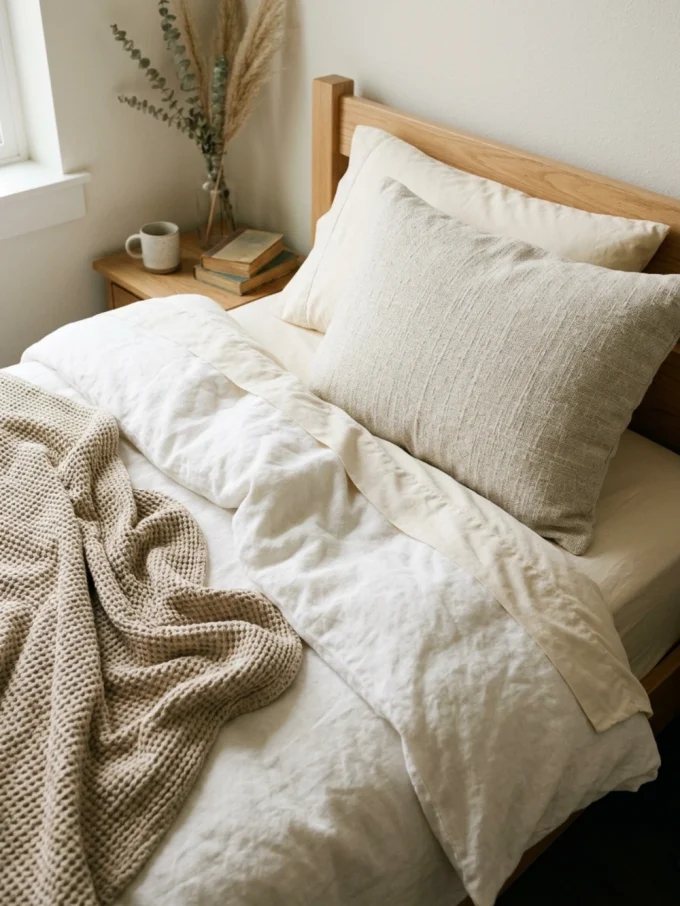
A soft neutral bedding set is one of the easiest ways to create a cozy dorm bed without making the room feel visually crowded.
Start with cream, ivory, beige, soft gray, or warm white bedding. Then add a couple of pillows in slightly different shades rather than trying to match everything perfectly. This creates the layered look that makes a simple bed feel much more finished.
Neutral bedding is especially useful in dorms because you can change the personality of the bed with inexpensive accessories. Add a sage green throw for a relaxed look, dusty pink pillows for something more feminine, or brown and tan accents for a warmer feel.
Design tip: Choose warm neutrals if your dorm room has harsh overhead lighting. They tend to make the space feel softer and more comfortable.
Avoid buying an entire bedding set where every piece is exactly the same shade and texture. A little variation makes the bed look much more intentional.
2. Layer a Quilt Over Your Comforter
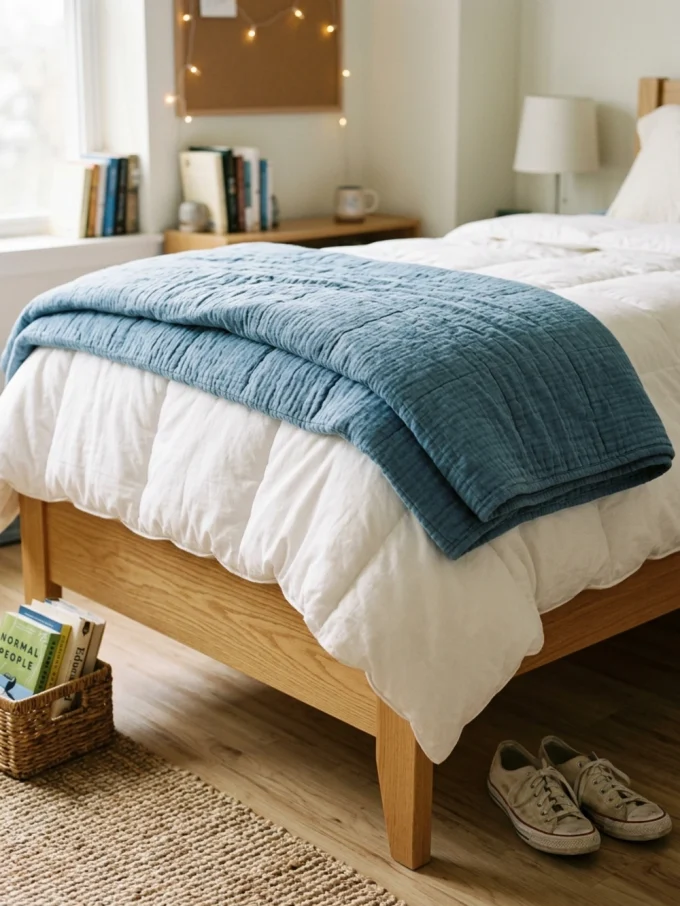
One of the simplest ways to make college dorm bedding look more expensive is to layer a quilt or coverlet over the main comforter.
You do not need to cover the entire bed with it. Fold the quilt toward the bottom third of the mattress so the comforter remains visible underneath. The different layers add depth and make the bed look softer without requiring lots of decorative pieces.
A lightweight quilt is also practical for college because it can be used by itself during warmer nights.
For a relaxed look, try a slightly crinkled cotton quilt instead of something perfectly smooth. The texture gives the bed that comfortable, lived-in appearance.
Budget tip: If buying another full-size bedding piece is too expensive, look for a lightweight throw-sized quilt or coverlet that can still create a layered effect across the lower half of the bed.
3. Add a Chunky Throw at the Foot of the Bed
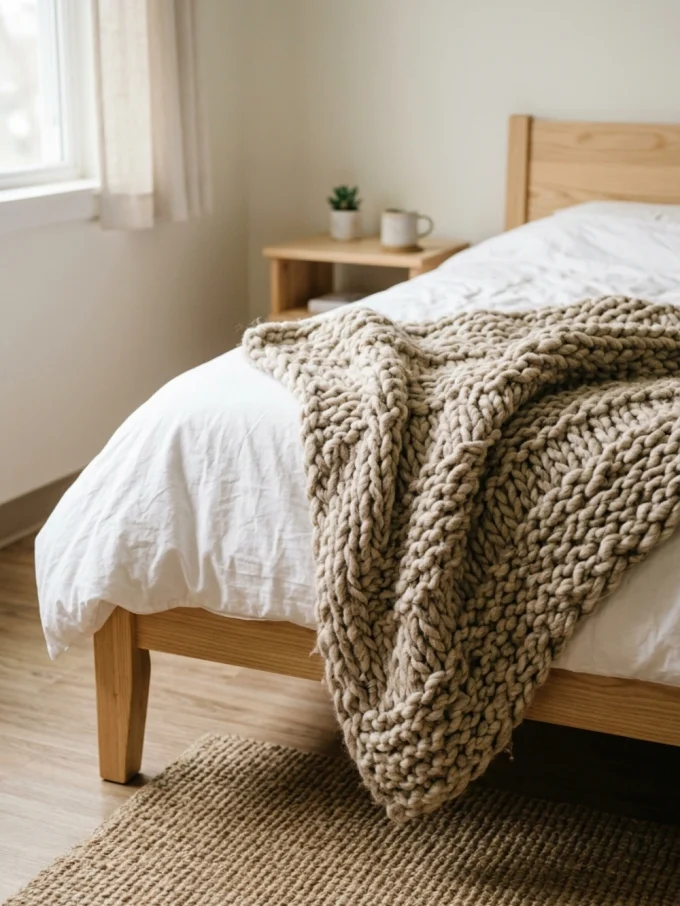
A chunky throw blanket instantly makes a dorm bed feel more inviting.
Drape it loosely across the bottom of the bed instead of folding it into a perfectly straight rectangle. Cream, oatmeal, taupe, gray, or muted colors work especially well if your main bedding is neutral.
The throw also has a real purpose. Dorm rooms can feel surprisingly cold, especially when the air conditioning is running, so having an extra blanket within reach is useful.
If your bedding already has a lot of pattern, choose a solid textured throw. If the bedding is plain, you can use the throw to introduce a subtle stripe, check, or other pattern.
The key is not to pile several bulky blankets onto a small dorm bed. One beautiful throw usually looks better than a mountain of bedding.
4. Mix Two or Three Pillow Sizes

Pillows are where a basic dorm bed can start to feel personal.
Instead of using pillows that are all the same size, combine your regular sleeping pillows with one or two decorative pillows. A square pillow behind a smaller lumbar pillow can create a simple layered arrangement without taking over the bed.
You can also mix textures rather than colors. For example, pair a smooth cotton pillow with a bouclé, linen-look, knitted, or subtly patterned accent pillow.
Keep the arrangement realistic, though. In a college dorm, you will probably move the pillows every night. Five or six decorative pillows may look great in a photo but become annoying when you need somewhere to put them before sleeping.
A good formula: sleeping pillows in back + one decorative pillow + one smaller accent pillow.
5. Try a Monochromatic Dorm Bed
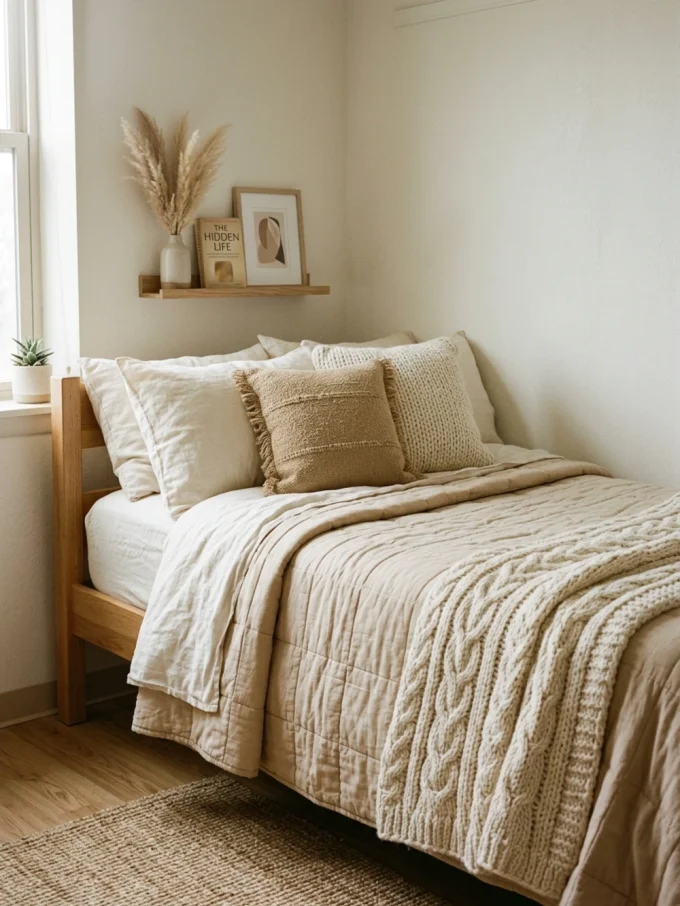
If you like a calm, polished room, keep your dorm bed within one color family.
A cream-and-beige bed is an easy choice, but you could also try soft gray, dusty blue, sage green, or muted brown. The important part is using several tones instead of one exact color.
For example, a beige dorm bed can include ivory sheets, a warm beige comforter, a slightly darker throw, and a tan accent pillow.
Because the colors are closely related, texture becomes more important. Quilting, woven blankets, linen-look fabrics, and knitted pillows can keep the bed from looking flat.
This is also a good approach for a tiny dorm because fewer contrasting colors can make the bed feel visually calmer.
6. Use Gingham for a Cute College Look
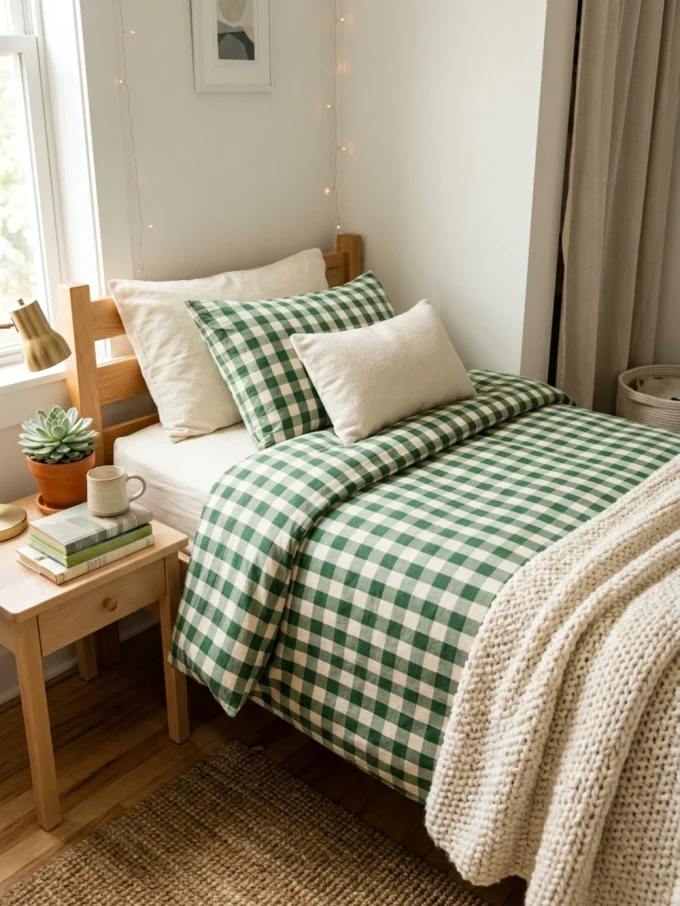
Gingham is an easy way to give your dorm bed a cute personality without making it overly complicated.
A gingham pillow, comforter, quilt, or throw can become the pattern that ties the whole bed together. Pink and white feels sweet and feminine, while green and cream feels fresh and relaxed. Blue gingham gives the room a classic college look.
Because gingham is already a recognizable pattern, keep the rest of the bedding relatively simple.
You can pair one gingham piece with solid bedding and a textured throw. That gives you enough visual interest without turning the bed into a collection of competing patterns.
Mistake to avoid: Mixing several different checks, florals, and stripes at once. In a small dorm, too many patterns can make the bed look busy very quickly.
7. Create a Feminine Pink and Cream Bed
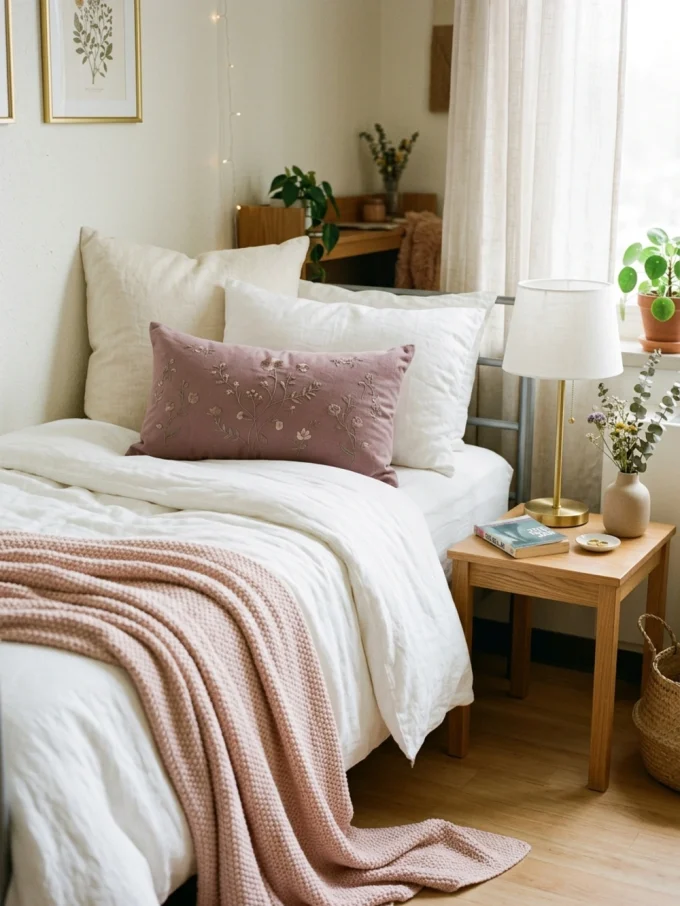
Pink does not have to mean bright or overly sweet. Soft blush, dusty rose, ballet pink, and muted mauve can create a much more sophisticated dorm bed.
Start with cream or white bedding and introduce pink through one or two layers. A blush throw, pink lumbar pillow, or floral accent pillow may be all you need.
If you want the room to feel warmer, add small touches of beige or natural wood. If you want it to feel more polished, pair blush with white and subtle gold-toned accents.
The trick is using pink as an accent rather than covering every surface in it.
8. Bring in Warm Earthy Tones
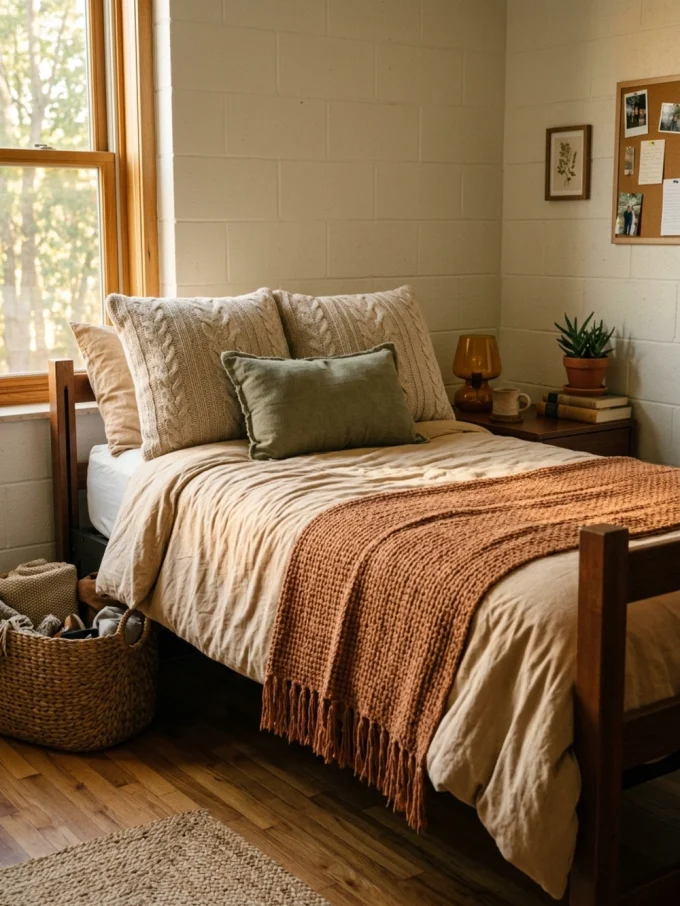
Warm earthy bedding can make a dorm room feel surprisingly comfortable and mature.
Think oatmeal, camel, tan, terracotta, muted olive, warm brown, and cream. These shades work especially well with natural-looking textures such as cotton, woven blankets, linen-look pillows, and soft knits.
You do not have to replace your entire bedding set to get the look. Keep a basic neutral comforter and add an earthy throw and one or two accent pillows.
If you want even more warmth, repeat one of the bedding colors somewhere else in the room, such as a small rug, desk accessory, wall print, or storage basket.
9. Make White Bedding Feel Less Plain

White bedding is one of the most versatile choices for a college dorm, but plain white bedding can sometimes feel unfinished.
The solution is layering texture.
Try a quilted comforter with a woven throw, textured pillows, and one small patterned accent. You can also introduce warmth through beige, tan, or wood-toned accessories around the bed.
White bedding makes it particularly easy to change your room throughout the school year. You can switch from pastel accents in spring to warm brown or rust tones in fall without buying a completely new comforter.
Just make sure the pieces you choose are easy to wash. Dorm life is not exactly gentle on white bedding.
10. Add a Bouclé or Textured Pillow

Sometimes one textured pillow is enough to make a simple bed look much more styled.
Bouclé, sherpa, woven, cable-knit, and other tactile fabrics can add softness without requiring another color or pattern.
A cream textured pillow works particularly well with neutral bedding because the interest comes from the fabric rather than a bold print.
Keep this detail small. A single statement texture usually looks more intentional than covering the entire bed in fluffy fabrics.
11. Use Stripes for a Classic Look
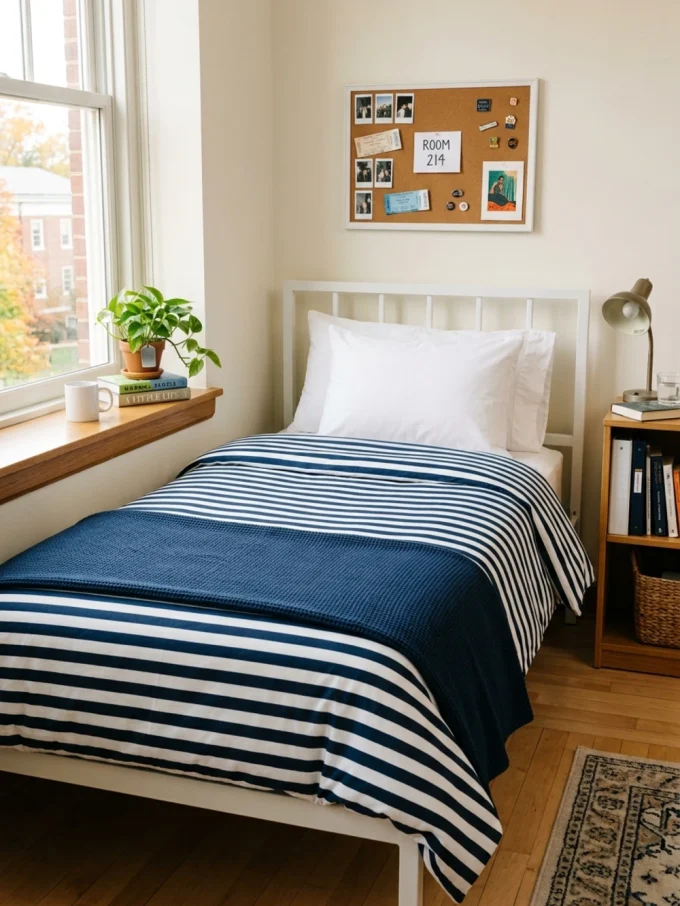
Stripes are a great option if you want college bed ideas that feel classic rather than overly trendy.
Blue and white stripes create a fresh look, while beige and cream stripes feel softer. Brown or muted green stripes can create a warmer, more earthy room.
You can use stripes on the main bedding or keep them as an accent through a pillow or throw.
If the striped piece is bold, let it be the main pattern. Pair it with solid bedding and simple textures so the bed still feels calm.
12. Create a Cozy Nancy Meyers-Inspired Bed
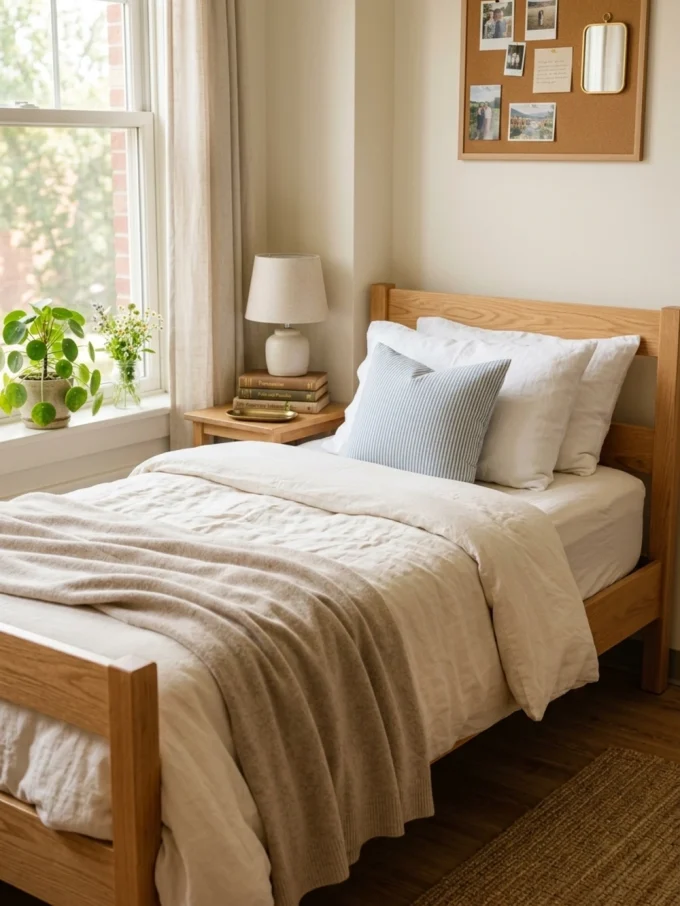
If you love the warm, collected feeling associated with Nancy Meyers-style interiors, you can bring that same idea into a college dorm without trying to recreate an entire movie set.
Think creamy bedding, soft blue or beige accents, classic stripes, relaxed textures, and a few pieces that feel timeless rather than trendy.
The goal is comfort first. A slightly rumpled duvet, a soft throw at the foot of the bed, and a couple of classic pillows can create that casual-but-put-together feeling.
For more ideas on bringing this aesthetic into a bedroom, you can also explore our guide to Nancy Meyers bedroom decor ideas.
The important part is not copying a particular room. Use the same design principles: warmth, comfort, natural-looking materials, and a collected appearance.
13. Add a Small Bedside Setup

Your bedding will look more complete when the area beside the bed feels intentional too.
In a small dorm, you may not have room for a traditional nightstand. A compact rolling cart, small storage unit, bedside caddy, or narrow table can provide the same function.
Keep the surface simple: a small lamp, water bottle, book, or one decorative object may be enough.
If your dorm bed is in a very tight space, our guide to bedside vanity layouts for tiny bedrooms has useful ideas for working with limited bedside space.
Practical tip: Make sure anything placed beside the bed does not interfere with walking space, electrical cords, or your ability to get in and out of bed.
14. Make a Tiny Dorm Bed Feel More Luxurious
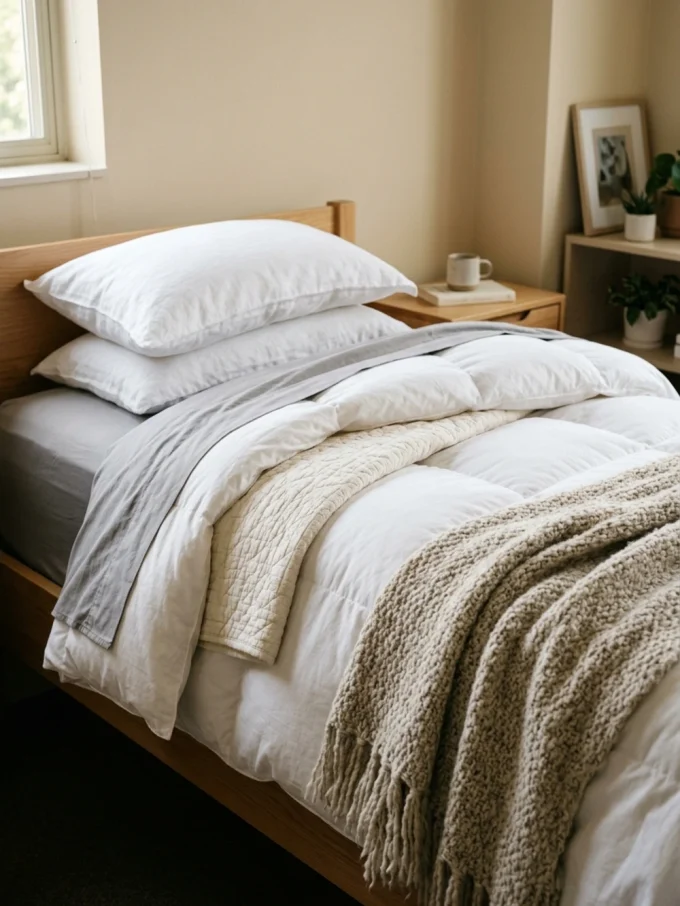
You do not need an expensive mattress or designer bedding to make a dorm bed feel luxurious.
Focus on the layers people actually notice: a comfortable mattress topper, soft sheets, a fuller comforter, two or three pillows, and one good-looking throw.
Keeping the color palette simple can also make the bed feel more polished. Cream, white, beige, soft gray, and muted blue are easy choices.
Then add one piece with noticeable texture. A quilted coverlet or chunky throw can make the entire arrangement feel richer.
Luxury in a dorm is really about comfort and layering, not filling the bed with expensive accessories.
15. Use Seasonal Bedding Layers
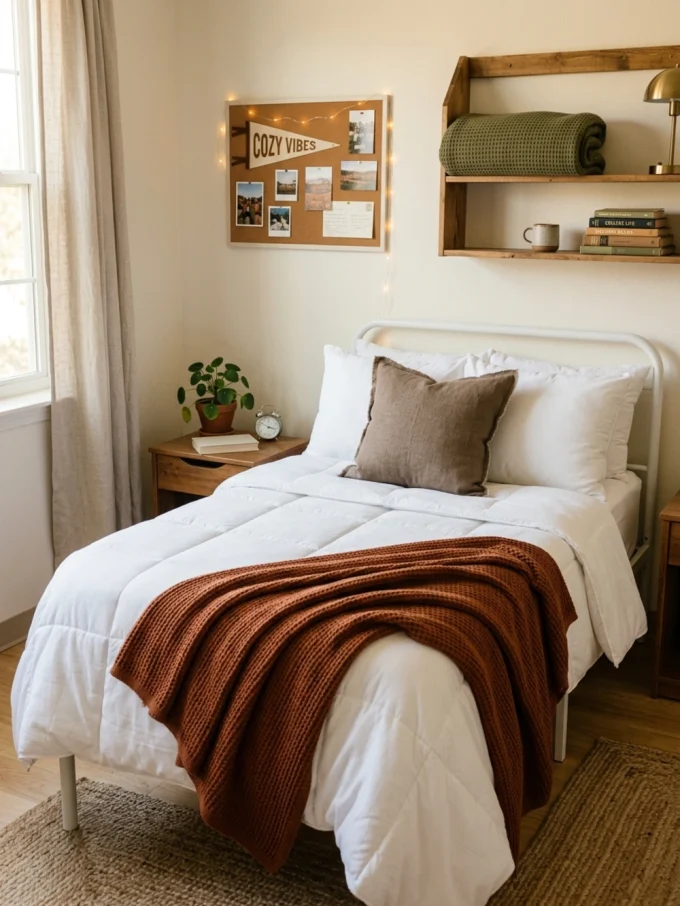
Your dorm bed can change with the seasons without requiring a completely new bedding collection.
For fall, add a rust, olive, caramel, or brown throw. In winter, use heavier textures and warmer blankets. For spring, switch to soft blue, green, pink, or floral accents.
Keep the main comforter and sheets neutral so they can work throughout the year.
This approach is especially helpful for students because you can store a few seasonal pillow covers or throws instead of storing an entire second bedding set.
16. Try a Colorful Eclectic College Bed
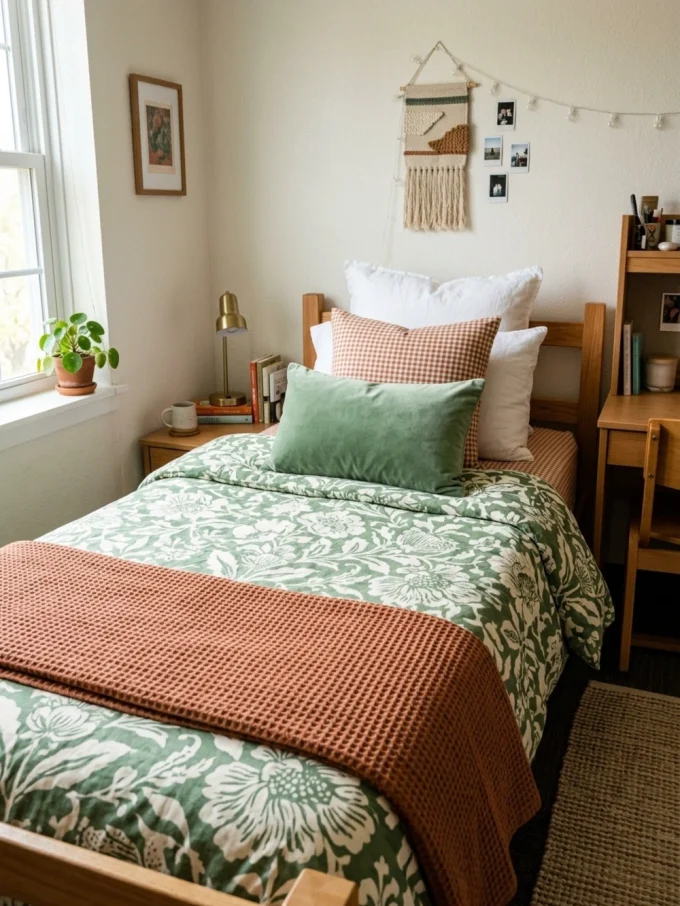
If neutral bedding feels too boring, let your bed become the colorful part of the room.
Choose two or three colors that work together and repeat them across the comforter, pillows, and throw. You could combine dusty blue with yellow, pink with burgundy, or sage with terracotta.
The easiest way to keep a colorful bed from looking chaotic is to repeat colors rather than adding a new color with every piece.
You can mix patterns, too, but give each pattern a different scale. For example, pair a larger floral with a small check and a solid textured pillow.
That creates an eclectic look while still giving the eye somewhere to rest.
17. Keep a Small Dorm Bed Looking Organized
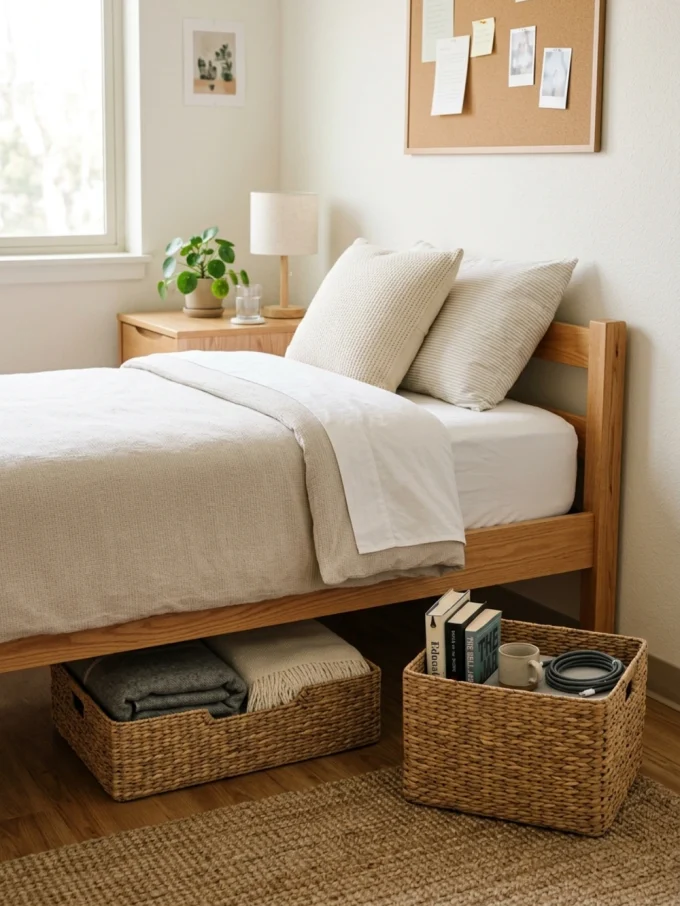
A beautiful dorm bed can quickly lose its appeal when blankets, clothes, backpacks, and chargers start collecting around it.
Because the bed is usually the visual center of a dorm room, keeping the area around it relatively clear makes a surprisingly big difference.
Use under-bed storage for extra blankets and seasonal items. A bedside basket can hold books or smaller essentials. Keep decorative pillows to a manageable number so they have somewhere to go at night.
You do not need a perfectly styled bed every morning. Just having a simple system for the things that normally accumulate around it can make the entire room feel calmer.
18. Add Personal Details Without Overcrowding
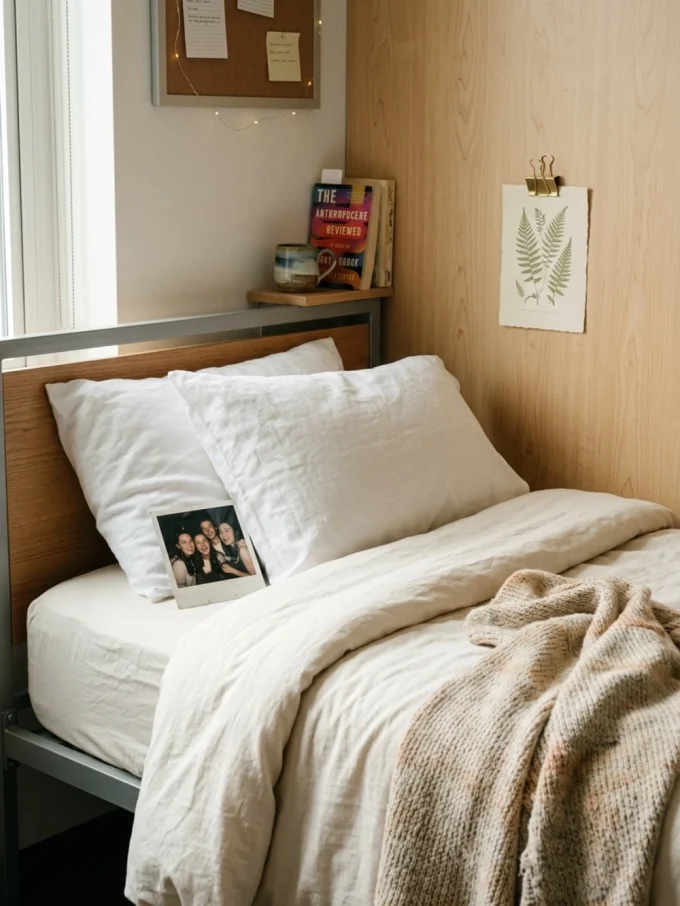
Your dorm bed should look like it belongs to you, not like a generic bedding catalog.
Add personality through a favorite color, a meaningful pillow, a small photo display nearby, a favorite blanket, or a piece of decor that reminds you of home.
The best personal details are usually small. You do not need to cover every available surface with photos and accessories.
If the bedding itself is neutral, these little details become even more noticeable.
Think of the bed as your foundation and the personal pieces as the finishing touches.
19. Finish the Bed With One Cozy Signature Layer
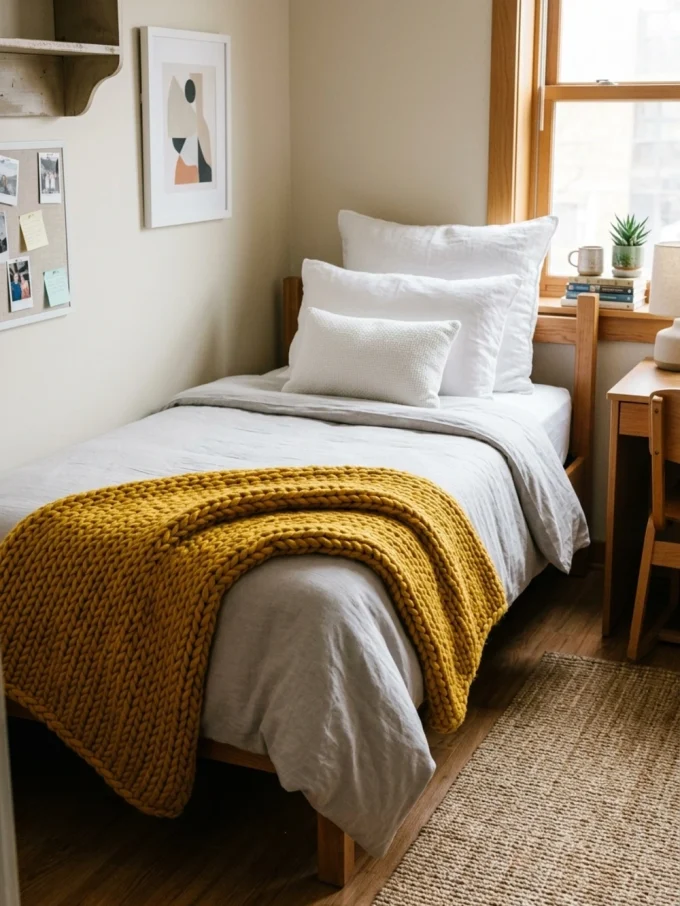
Once the bedding, pillows, and main layers are in place, choose one final piece that gives the bed its personality.
It could be a chunky cream throw, a patterned quilt, a colorful lumbar pillow, a vintage-style blanket, or a textured coverlet.
This final layer should feel intentional rather than necessary. It is the piece that makes you look at the finished bed and think, that feels like my room.
If the bed already has several patterns and textures, keep the final layer simple. If everything feels plain, this is the perfect place to introduce a little contrast.
The goal is not to add more just because there is space. A cozy college bed usually looks better when every layer has a reason to be there.
How to Make a Dorm Bed Look Cozy Without Spending a Lot
You do not need to replace everything to get a completely different look.
Start with the bedding you already have and identify what is missing. If the bed looks flat, add a textured throw. If it feels plain, add one patterned pillow. If it looks messy, reduce the number of decorative pieces and focus on clean layers.
A few inexpensive changes can have a bigger effect than buying an entirely new bedding set.
A useful budget order is:
- Comfortable sheets
- Mattress topper if needed
- Main comforter or duvet
- One cozy throw
- Two or three useful pillows
- One decorative accent
This keeps the focus on comfort while still giving you room to style the bed.
Common Dorm Bedding Mistakes to Avoid
The biggest mistake is buying bedding based only on how it looks in a photo.
A dorm bed needs to work in real life. Before buying anything, think about washing, storage, temperature, room size, and how much effort you want to spend making the bed every day.
Avoid using too many decorative pillows, choosing bedding that is difficult to wash, piling bulky blankets onto a tiny bed, or mixing too many unrelated patterns.
Also remember that dorm rooms are temporary spaces. You do not need to spend a huge amount of money to make yours beautiful.
A few comfortable, versatile pieces will usually serve you better than a room full of trendy accessories.
How to Choose Bedding for a College Dorm
Start by checking the actual mattress size provided by your college. Twin XL is common in college dorms, but you should confirm before buying sheets or fitted bedding.
Then think about the temperature of your room. If your dorm tends to be warm, breathable layers may be more useful than one extremely heavy comforter.
Next, choose a color palette that you will not get tired of quickly. Neutral bedding gives you the most flexibility, while colorful bedding can create a stronger personality from the beginning.
Finally, consider maintenance. Machine-washable bedding is generally much easier to live with during college than pieces that require special care.
Final Thoughts
The best dorm bedding ideas are the ones that make your college room feel comfortable, personal, and easy to live in.
You do not need a perfectly styled bed with dozens of pillows. Start with comfortable bedding, build a few simple layers, introduce one or two colors you love, and finish with a throw or textured accent that gives the bed some personality.
Whether your style is soft and neutral, feminine and pink, earthy and warm, colorful and eclectic, or classic and relaxed, the same principle applies: make the bed comfortable first, then make it beautiful.
That balance is what turns a basic college dorm bed into a cozy place you actually want to come back to.
FAQs About Dorm Bedding Ideas
What bedding is best for a college dorm?
The best college dorm bedding is comfortable, washable, easy to layer, and appropriate for your dorm mattress size. A practical combination is fitted sheets, a comfortable comforter or duvet, a lightweight quilt or throw, and a few pillows.
How do I make my college dorm bed look cute?
Use layers rather than buying lots of decorations. Start with a simple comforter, add one textured blanket, mix two or three pillow sizes, and introduce a small amount of color or pattern. Keeping the palette coordinated will make the bed look more polished.
How can I make a dorm bed cozy?
Soft bedding, a comfortable mattress topper, layered blankets, and textured pillows can make a dorm bed much cozier. Warm neutral colors and tactile fabrics such as quilts, knits, and woven throws can also make the bed feel more inviting.
What colors are best for dorm bedding?
There is no single best color, but cream, beige, white, soft gray, sage green, dusty pink, muted blue, and warm brown are versatile choices. Pick colors that work with the other decor you plan to use in the dorm.
How many pillows should I put on a dorm bed?
Two or three decorative pillows are usually enough for a dorm bed. Too many pillows can take up valuable space and become inconvenient when you need to sleep.
Is white bedding a good idea for college?
White bedding can work very well in college because it is versatile and easy to style with different accent colors. However, choose washable fabrics and be prepared to clean it regularly because dorm life can be messy.
How can I decorate a dorm bed on a budget?
Keep your existing main bedding if possible and spend money on high-impact pieces such as a throw blanket, pillow covers, or a lightweight quilt. Changing the texture and accent colors can make the bed look completely different without replacing everything.
Should I use a comforter or duvet in a dorm?
Both can work. A comforter is often simpler because the filling and cover are one piece, while a duvet gives you more flexibility because the cover can be removed and changed. Choose whichever is easiest for your washing and storage routine.
How do I make a small dorm bed look bigger?
Use lighter bedding colors, avoid excessive visual clutter, and keep the layers relatively simple. A coordinated color palette can make the bed feel cleaner and less visually heavy in a small room.
What makes a dorm bed look expensive?
Layered bedding, coordinated colors, varied textures, and a well-chosen throw can make an inexpensive dorm bed look more polished. You do not need expensive brands; thoughtful layering usually has a bigger visual impact.